There has been a lot of interest in
space travel and ventures since NASA stopped their shuttle program. Much is
coming from the private sector. Three main contenders that have emerge are billionaires
, Amazon founder
Jeff Bezos , C.E.O of Tesla Motors Elon
Musk and Virgin Group founder Sir Richard Branson
Blue Origin
This is a privately fundedaerospace
company
owned by Amazon founder Jeff Bezos . The company is developing technologies to enable private
human access to space with the goal of dramatically lower cost and increased
reliability.
It is employing an incremental approach from suborbital to orbital
flight, with each developmental step. building on its prior work www.blueorigin.com/
Virgin Galactic
This is a company owed by Sir Richard Branson Virgin Groupwhich plans to provide suborbital space
flightstospace tourists, suborbital
launches forspace science missions,
and orbital launches of smallsatellites.
Further in the future, Virgin Galactic hopes to offerorbital human
spaceflightsas
wellVirgin Galactic's spacecraft
is launched from a large aeroplane, giving the spacecraft more initial speed
and altitude than if it were launched from the ground. www.virgingalactic.com/
Space Exploration Technologies Corporation, orSpaceX
is a
space transportcompany
headquartered inHawthone
Carlifonia. It was founded in 2002 by formerPaypalentrepreneurElon Musk, with the goal of
reducing space transportation costs and enabling the colonization of Mars www.spacex.com/
A Chromebook is a personal computer running Chrome OS as its Operating system. The devices are designed to be used while connected to the Internet and support application that reside in the web, rather than traditional applications that reside on the machine itself. All the data is stored in the "cloud" accessed by an internet connection. they are thin client
The first Chromebooks for sale, by Acer Inc and Samsung, were announced at the Google I/O conference in May 2011 right now it seem like every one has joined the bandwagon, every manufacturer want a piece of this market and they have been eating windows market slowly
Google is doing a good job by targeting learning institution with the Chrome project. Apart from been light they are fast and affordable .Google is making both their operating system and Chromebooks more offline friendly.
the disadvantage of chromebook is since they are cloud based they dont come with a large disk space and processing power. We will wait and see if they will take over the like Android did
Japan Rail is rolling out a brand-new train that can hit 311 miles per hour. It's called the JR Tokai L0 (L Zero) and as it's magnetically levitated, it hovers above the track for smooth, frictionless travel in any weather.
Slated to begin functional service in 2027, it's only running a test route between Tokyo and Nagoya for now. The train features an extremely long and angular front car to reduce air resistance. Trains will be up to 16 cars long and can carry up to 1,000 passengers at a time as they shuttle between the two cities. It's a 200-mile trip by automobile, but this train will complete a run in 40 minutes. Other bullet trains take up to 95 minutes to make the same trip.
For all its technological promise, the train brings a big financial burden to the table ,it will cost about $100 Billion to build a finished mag-lev line from Tokyo to the ultimate finishing point of Osaka, some 500 miles away.
If everything goes according to plans with time and money, the Japanese will be able to move around their country far more quickly than ever before.
Yesterday Apple announce
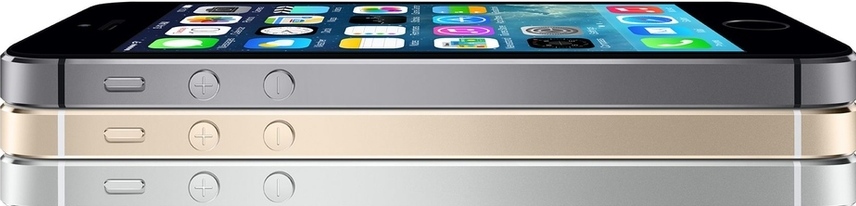
their new Iphone 5 range of phone. The launched the iphone 5s
it looks similar to the other but has several hardware improvement and comes in 3 colors schemes, black with grey,white with gold and white with grey
The most important new feature of the iPhone 5S is its home button, which has been redesigned and includes a fingerprint scanner.The fingerprint scanner will allow you to unlock your phone by
placing your finger on top of the home button. It will also let you sign into
apps and the iTunes store so you don't have to enter in a password every time
you download a new app, song, or video from Apple. The iPhone 5S stores your
fingerprint on its processor.
The home button no longer has the same circle-in-square design. Instead, it's
completely smooth and has a stainless steel ring around it. The home button
itself is made of scratch-proof sapphire.
The next big feature is the camera. Apple improved the camera
sensor in the iPhone 5S to bring in more light and show bigger pixels for
better overall photo quality. The camera flash now has two LED lights, which
will help colors and skin tones appear better in low-light environments and comes with image stabilizer that prevent you from taking blurry photos.
As for the camera software, you'll be able to take several photos
at once in "burst mode." The software will then help you choose the
best photo of the bunch.
Under the hood, the iPhone 5S has a new processor called the A7.
The A7 processor is twice as fast as the processor in the iPhone 5. There's
also a new chip called the M7 that houses sensors like the compass, gyroscope,
and accelerometer. Health and fitness apps will be able to use the processor to
track your movements.
The battle smart watch has just begun with Samsung and Sony launching their devices yesterday at IFA. Both are powered by Google Android (Ice Cream Sandwich) and have a 1.6 inch screen.
Sony's smart watch display
has been kicked up a bit to a 1.6-incher with 220 x 176 resolution. Of course,
that's still a tiny color touchscreen, so you're only going to fit around six
icons on there at any one time. The device is also slimmer than its predecessor,
which goes a long way for something you're going to wear on your wrist, though
we wouldn't exactly call it thin at the moment.
Samsung Galaxy
Gear has one glaring problem with it. It only works with one Samsung phone, the
soon-to-be-released Galaxy Note III. The Galaxy Gear won't work with other
Galaxy phones like the Galaxy S4.
Microsoft will pay 3.70 billion Euro for Nokia's devices business. That's nearly $5 billion is U.S. dollars. Microsoft will also pay an additional 1.65 billion Euro ($2.2 billion U.S.) for the rights to Nokia's patents.
All together, the deal will cost Microsoft about $7 billion U.S.
Microsoft will also take on about 32,000 Nokia employees. Nokia's CEO Stephen Elop will transfer to Microsoft too. (Elop used to work at Microsoft before becoming the Nokia CEO.)
The joining of Microsoft and Nokia isn't a huge surprise. Nokia is the only manufacturer that exclusively uses Microsoft' Windows Phone 8 operating system for its top-tier smartphones. Meanwhile, Microsoft has struggled to gain significant market share for Windows Phone as Android and the iPhone continue to dominate.
Nokia's flagship Lumia phones are most likely the best-selling Windows Phones today. The company sold 7.4 million last quarter. A lot of those sales are due to the fact that Nokia attacks the low-end of the smartphone market with cheaper devices. It also makes high-end phones like the Lumia 920, 925, and 1020
.
This can also be another sign that Microsoft is taking its transition from a software company to a "devices and services" company much more seriously. Until last year, Microsoft did not make any major products (besides the Xbox) itself. That changed with its line of Surface tablets that run the new Windows 8 operating system. The company announced that it was making the transition to a company that provides both devices and services.
But Microsoft has yet to make a smartphone of its own, despite numerous rumors that it had plans to. By buying Nokia, Microsoft now has its own manufacturer that it can work closely with.
Microsoft's purchase isn't likely to annoy other manufacturers that make Windows Phones either. Most of those manufacturers (Samsung, HTC, etc.) have been able to make more money from Android devices than an alternative operating system like Windows Phone 8. Nokia is the only manufacturer that relies almost entirely on Windows Phone 8.
The HTC One X brings the best processor, an HD screen and a sublimely thin chassis as the Taiwanese firm looks to recreate the success of the original Desire.
The One X is a phone that's runs a quad core CPU (Nvidia's Tegra 3) plus one of the largest screens on any HTC… and that's without being given a gargantuan name like the Titan.
:
With Ice Cream Sandwich running from the outset (now boosted to Android 4.0.4 and Sense 4.1), this is the phone that really takes HTC to the next level – but is it a case of too much, too soon for a brand that's still really just over a decade old?
Design
HTC's phones have been slowly moving towards sleeker design ever since the purchase of One & Co (which may have had more than a little to do with the new naming strategy) and the release of the HTC Legend.
Since then, unibody designs and smooth lines have been a feature of its devices, and that principle has been evolved with the HTC One X.
However, before you read any further, a note of caution: if you're not willing to accept a pretty large mobile, then you're better off waiting for the likes of the HTC One S – the One X is a large piece of phone estate in your hand.
But it's that large 4.7-inch screen that is such a stunning feature of the One X – it's a 720p HD display packed into a chassis that's only 8.9mm thick. Plus it's also using the Super IPS LCD 2 technology that, while it lacks the vivid colour reproduction of Samsung's Super AMOLED range, really brings games and movies to life.
We're not going to get into the pros and cons of OLED vs LCD – suffice to say, it's a matter of choice whether you prefer improved contrast ratios or a more true to life colour reproduction. In our opinion, both are excellent and the One X will certainly not disappoint.
Like the Samsung Galaxy Nexus, it's got a pixel density (screen sharpness) that rivals the iPhone 4S, but does it on a screen that's over an inch larger. It's one of those devices that you have to see to really believe, but there's a good chance you'll confuse it with a shop model with a static image Sellotaped onto the front.
The rest of the phone design is, again, pretty subjective. For the large size, it's very light indeed at 130g. That's quite a bit heavier than the likes of theSamsung Galaxy S2 (14g, in fact) but lighter than the Galaxy S3 but in reality you'll consider it to be almost impossible to feel in the pocket.
The rest of the phone is pretty minimal in design. Unlike the Samsung Galaxy Nexus, we're offered some physical (well, touch sensitive) keys on the front of the HTC One X, meaning the display won't need to jump up and down to show the contextual versions.
There's an expected volume rocker switch on the right-hand side, a power button on the top (accompanied by a 3.5mm headphone jack) and a microUSB slot on the left-hand side – which also doubles a Mobile High-Definition Link to hook up to a TV.
It's a very sparse offering on a phone that's so expansive in its design, and leads to a very minimalist feel, which will likely appeal to many.
That effect is compounded by the microSIM slot on the back of the phone, which requires an Apple-esque device to open it up – and there's no microSD support to be found here either, with the battery locked into the unibody design.
While the smaller SIM will be a slight annoyance to those upgrading from the full-size version, the lack of a microSD slot will be a big worry for many, especially as HD movies and large games will play very well on a phone like this.
There is 32GB of onboard storage, but that's not going to be enough for the ilk of smartphone user that wouldn't buy an iPhone until capacity was raised to 64GB.
The rear of the phone features the 8MP camera, which protrudes quite a lot from the handset, but thanks to the slightly curved nature of the chassis, doesn't affect the phone too much when resting on a table.
The power button on the top of the phone can be quite hard to hit with the phone resting in the palm if you've not got the largest hands in the world, although the travel is such you'll hit it pretty accurately most of the time, which is something some phones fail to manage.
The size is the main design issue we can see for most people – this sleek-looking, lightweight phone will appeal to both men and women, but those with smaller hands will struggle to use the HTC One X effectively without doubling down on their digits.
The white version of the One X, and it's worth noting that in a few hours it was quite dirty with fingerprint smudges and the like, so be warned you might want to fork out for a case too.